
AI + ZERO KNOWLEDGE®
End-to-end AI resolution requires one missing layer: secure transactions.
Conversational AI can understand intent and orchestrate workflows, but the highest-value customer interactions—payments, authentication, forms, signatures, uploads—often require regulated or complex data. Journey equips AI agents with secure tools to complete those steps without exposing raw sensitive data to the AI environment.
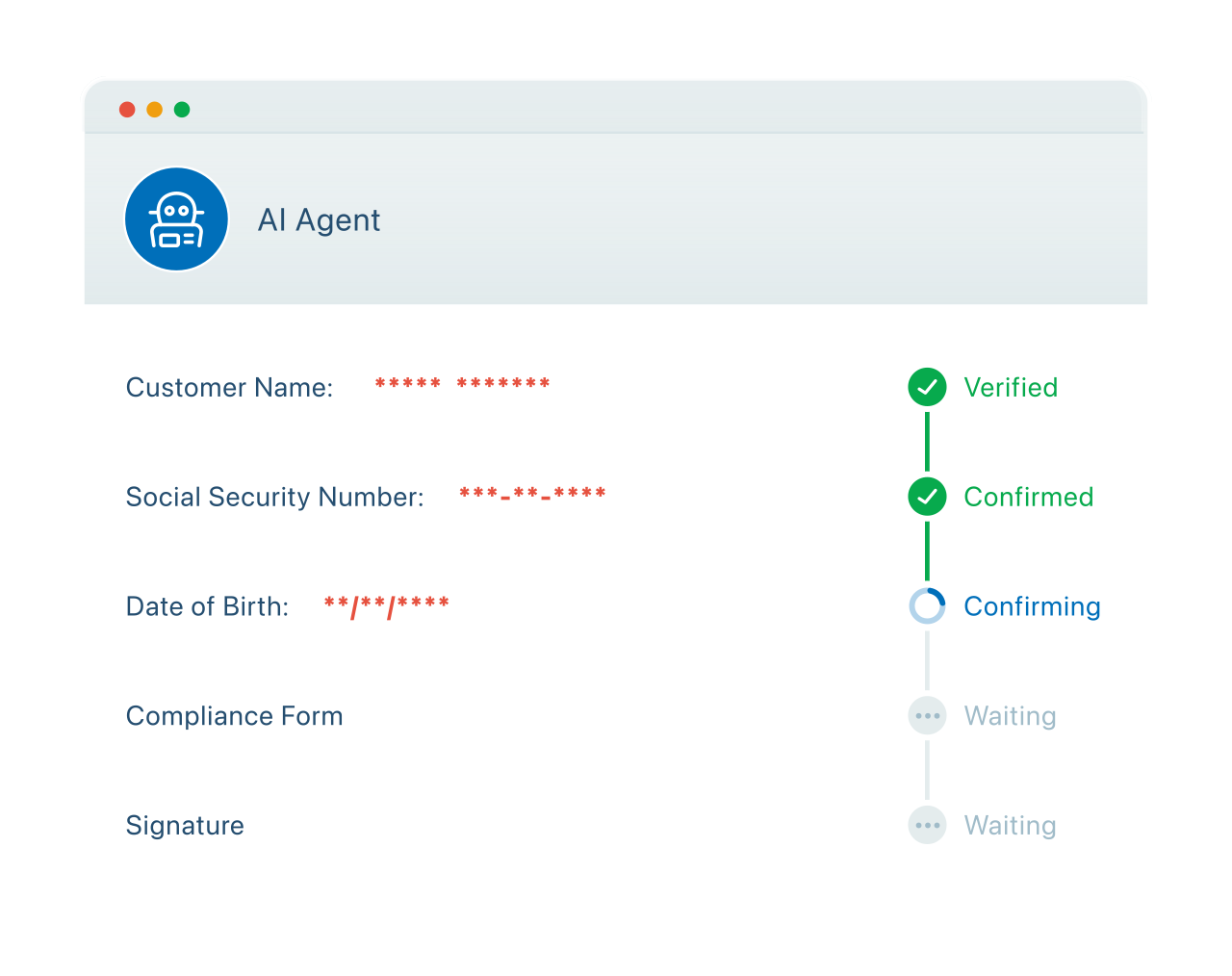


Why bots fail to resolve the issues that matter most.
End-to-end resolution requires taking action—often with regulated or complex data. That’s why the industry tends to split customer service into two buckets:
- Use cases eligible for full automation
- Use cases that require escalation to a human
The dividing line is rarely knowledge or intent. It’s usually:
- Data privacy and governance, and
- Workflow complexity (payments, identity, signatures, complex forms, document capture).

Journey exists to move that line—so AI can safely complete the workflows that were previously out of bounds.

Redaction is cleanup. Secure transaction architecture is the solution.
Many AI stacks try to handle sensitive data by detecting it after it appears and redacting it from transcripts and logs. But sensitive inputs still enter the interaction layer first—then exposure spreads across recordings, analytics pipelines, QA tooling, and tool traces.
Journey flips the model:
Keep raw sensitive inputs out of the AI layer in the first place, and return only what the workflow needs to continue—results, confirmations, and proof artifacts.
Tools and results—not raw sensitive payloads.
AI orchestrates. Journey transacts. Your systems receive results.
Journey provides secure, deterministic tools for the transactional moments in customer experience:

Model Context Protocol (MCP)
Journey tools are available through MCP.
Journey exposes tools through a single MCP endpoint (remote over the internet) using Streamable HTTP. Your AI platform can discover tools, then authorize and execute them as needed.
- Tool discovery is available without OAuth.
- Executing a tool requires OAuth authorization.
- Your integration is tenant-scoped.
- Environments include staging and production.
(Details and credentials are provided after sandbox approval.)
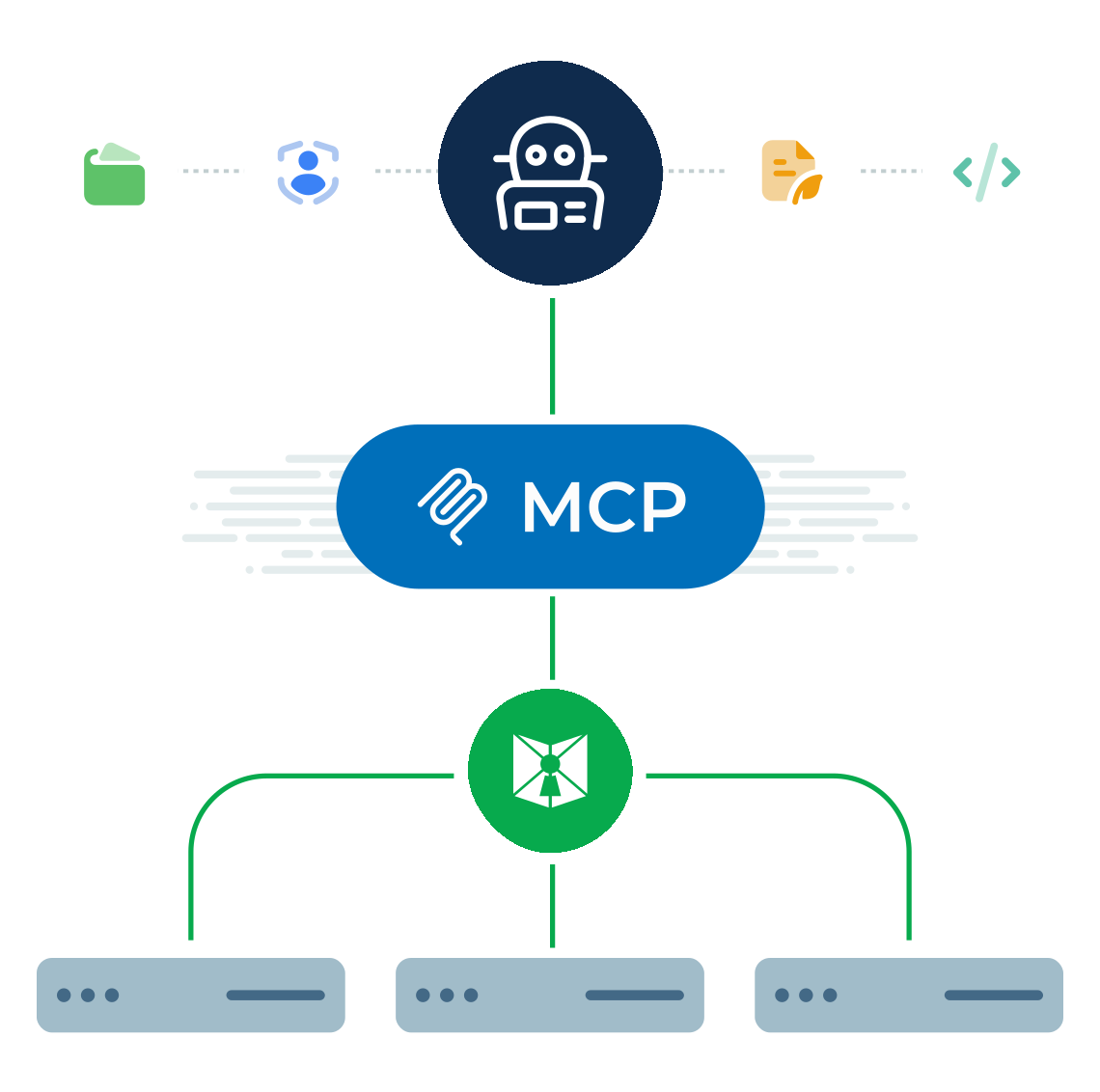
How regulated AI resolution actually happens.
Decide
The AI determines a regulated or high-veracity step is required (pay, verify identity, sign, complete a form, upload docs).
Invoke
The AI invokes Journey via MCP (or API) and specifies delivery + destination.
Complete on the customer device
Journey delivers a secure mobile workflow. The customer completes the step using smartphone-native capabilities.
Return results, not raw data
Encrypted data routes to destination systems. The AI receives a structured result object and continues the conversation.
Results Object Examples:
• payment_status: success / fail / pending (+ receipt reference)
• auth_status: verified / not_verified (+ assurance level)
• document_status: signed / declined (+ document reference)
• form_status: complete / needs_review (+ validation status)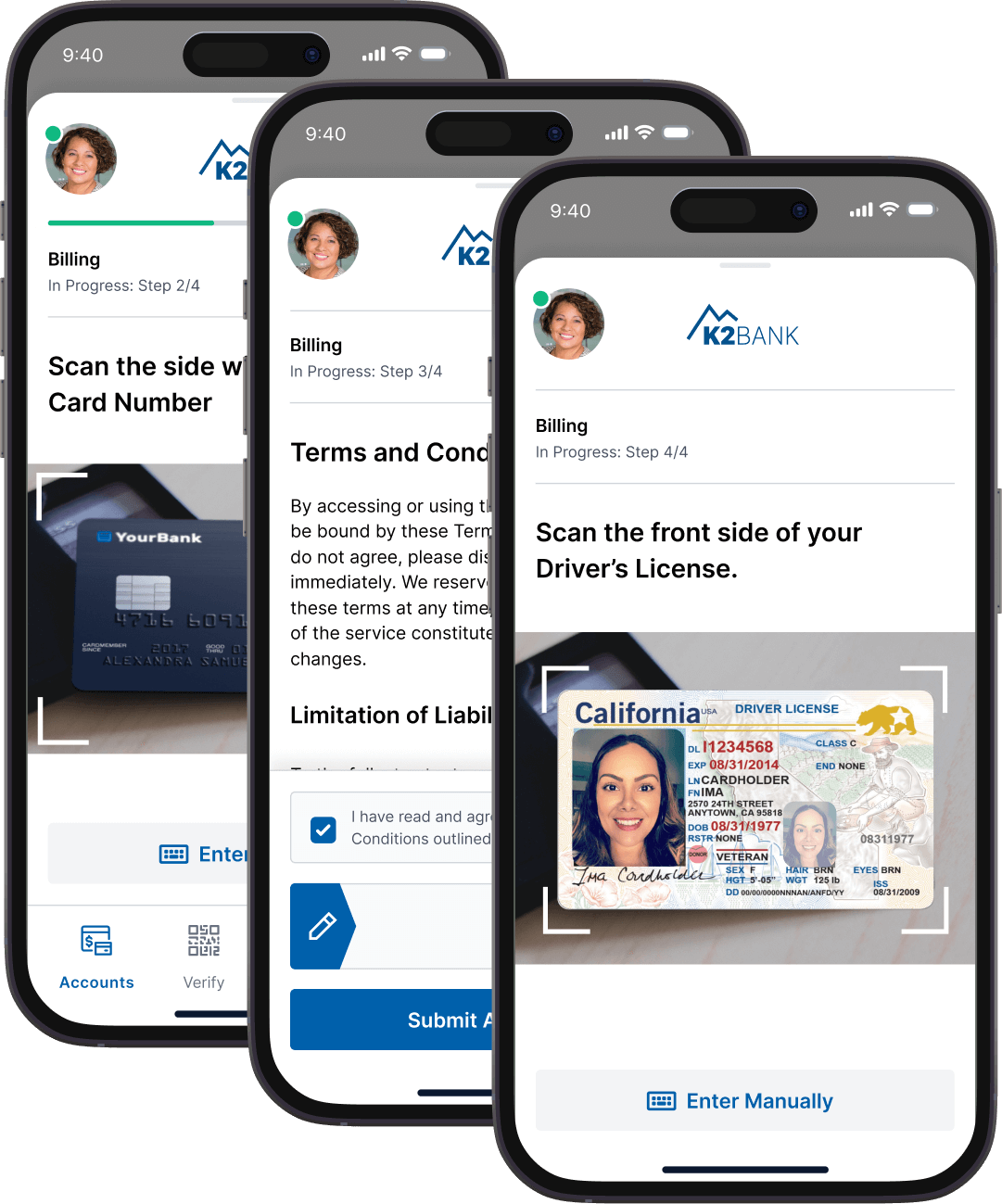
Higher containment in the workflows that drive cost and risk.
- Bill pay, ordering, and collections
- Account access, password reset, and step-up verification
- Intake, consent, and document-heavy workflows
- High-risk approvals and authorizations
- Multimodal tasks: IDs, images, uploads, signatures, complex form
Security and compliance posture matters more as AI becomes autonomous.
When AI takes action, governance needs to be designed in—not bolted on. Journey reduces risk by reducing exposure: raw regulated inputs do not need to enter AI context windows, call recordings, or transcripts to complete a workflow.
Want to automate the workflows AI can’t safely touch today?
We’ll map your top intents and show how Journey enables regulated end-to-end resolution using MCP tools—payments, authentication, forms, and documents—without exposing raw sensitive data to the AI environment.