
AI self-service breaks when regulated data starts. Journey fixes that.
The highest value, and highest risk, user journeys involve regulated and complex data. Journey equips AI agents with secure tools to collect and verify more data while simultaneously reducing exposure to it.

Why
Why AI struggles to contain the workflows that matter most.
There are three core blockers:
Transactional AI
To increase containment, AI needs more tools—not more prompts.
The winning architecture pairs conversational AI with deterministic tools for sensitive and complex steps. Journey provides those tools:
- Mobile-first payment collection (including wallets)
- Passkeys + OTP authentication
- Forms and structured intake
- eSignature and document workflows
- File upload (ID, proof of insurance, supporting docs)
- Flexible multi-step flows that combine these into a single guided experience
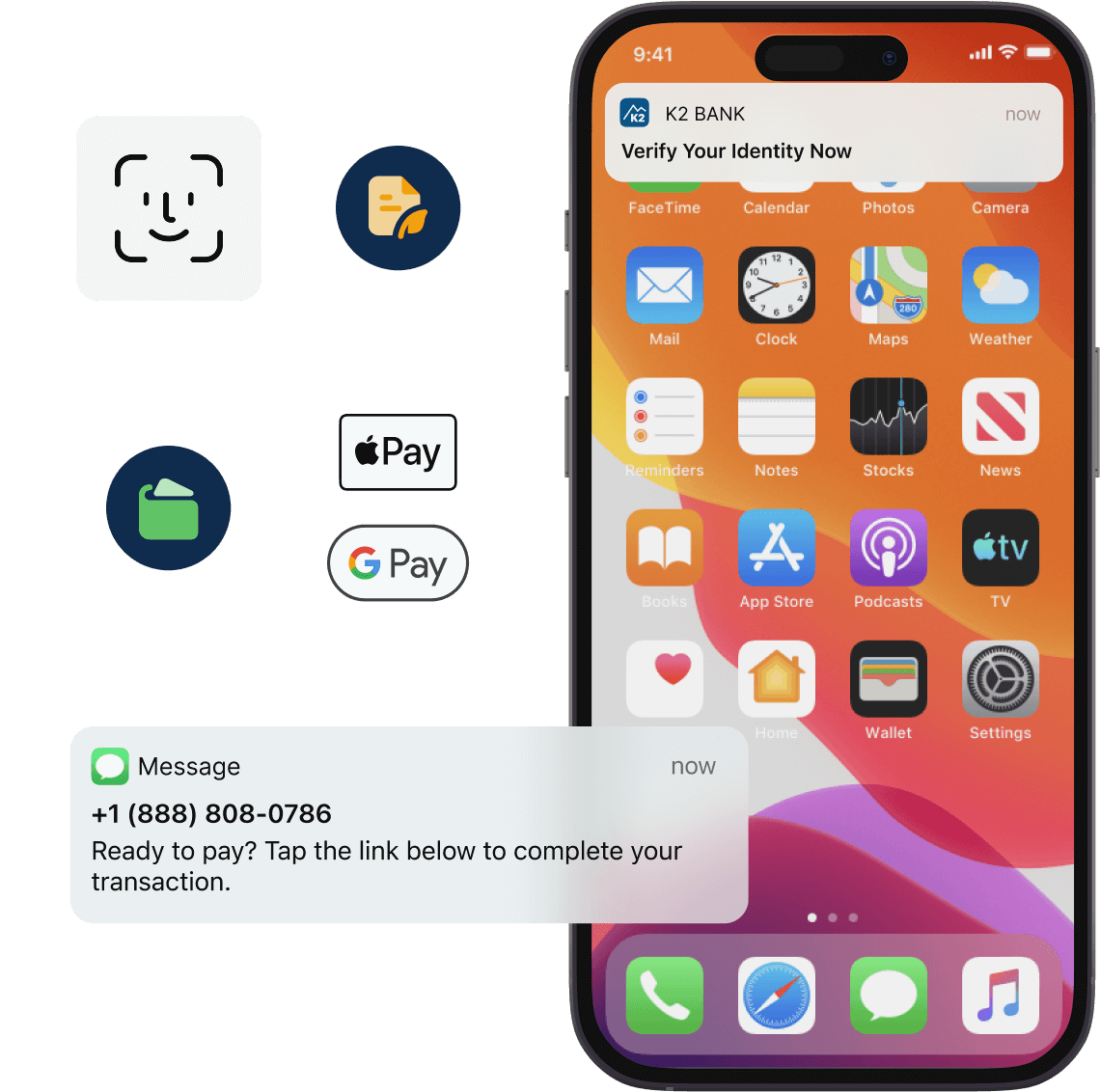
How Journey enables AI self-service containment
Detect intent
Your AI agent identifies a regulated or complex action is required (payment, authentication, signature, form, etc.).
Invoke Journey
The AI agent triggers Journey through API and/or MCP.
Customer completes the step
Journey sends a secure link and the customer completes the task on their smartphone.
Return results (not raw data)
Sensitive inputs route to the systems that truly need them.
Your AI agent receives verified results and status—so it can complete the flow confidently.
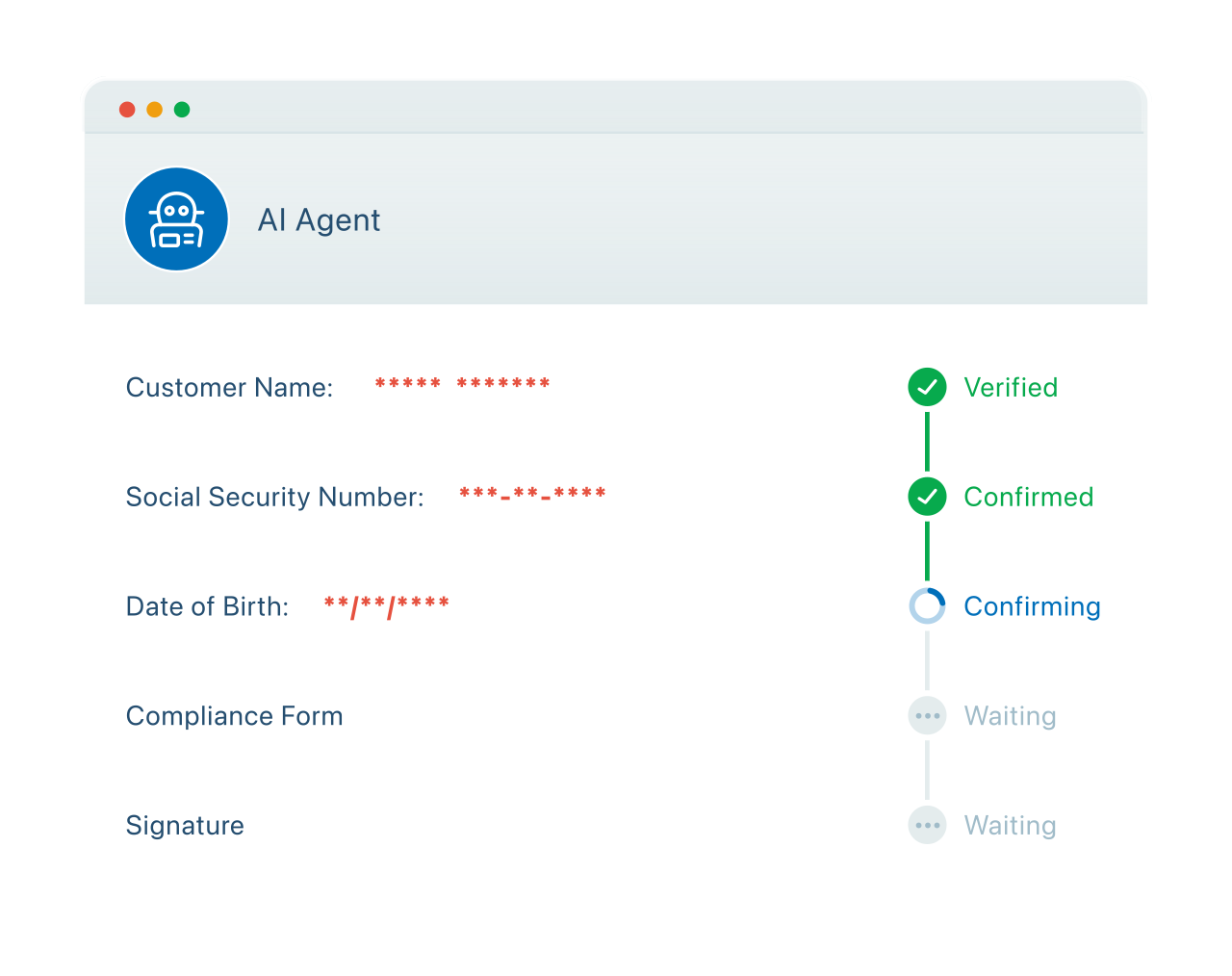
AI adoption stalls when sensitive data enters the interaction layer.
As AI agents become more capable and more autonomous, organizations are increasingly focused on:
- Data privacy and governance
- Unauthorized or unintended actions
- Fraud and identity threats
- Audit scope and compliance burden
The easiest way to reduce risk is to reduce exposure:
Keep raw sensitive inputs out of AI context windows, transcripts, call recordings, agent desktops, and downstream logs.
Journey is built for exactly that.
Examples of AI self-service Journeys

The Result
Higher containment without higher risk.
- Higher completion rates for transactional intents
- Faster resolution (less agent time, fewer transfers)
- Reduced exposure to regulated data across systems
- Better fraud resistance through step-up authentication and device-based verification
- A cleaner path to scaling agentic AI in regulated industries
Get Started
Want to unlock AI containment for regulated workflows?
We’ll map your top intents and show exactly how Journey helps AI self-service complete payments, authentication, documents, and complex forms while keeping raw sensitive data out of scope.