
PCI compliance solved—without SBC integrations or call-path appliances.
Phone payments are one of the highest value, highest risk, highest cost workflows in the contact center. Journey enables secure digital, voice, and DTMF payments while keeping cardholder data out of your CCaaS, UCaaS and AI tech stacks—without any SBC integration.

Two Broken Models
Why “PCI solutions” still create cost, risk, and fragility.
Model A
Call-path appliances (SBC-based integrations)
These approaches sit in the flow of every call to manage payment capture. That creates:
- Added hardware/software complexity and failure points
- A larger operational blast radius (payments depend on call-path stability)
- Architectural mismatch for AI workflows (autonomous/agentic flows don’t map cleanly to a trunk appliance)
- Persistent risk that sensitive data still enters systems
Model B
“Secure rooms” and specialized agent pools
Many organizations reduce PCI scope by routing payment calls to:
- Higher staffing and training burden
- Increased transfers and longer handle time
- Lower flexibility for WFH and distributed teams
- Poor fit for modern AI-assisted workflows
A Simpler Model
Keep the conversation. Move the sensitive step off the contact center.
Journey replaces “collect in-band and redact later” with a simpler model:
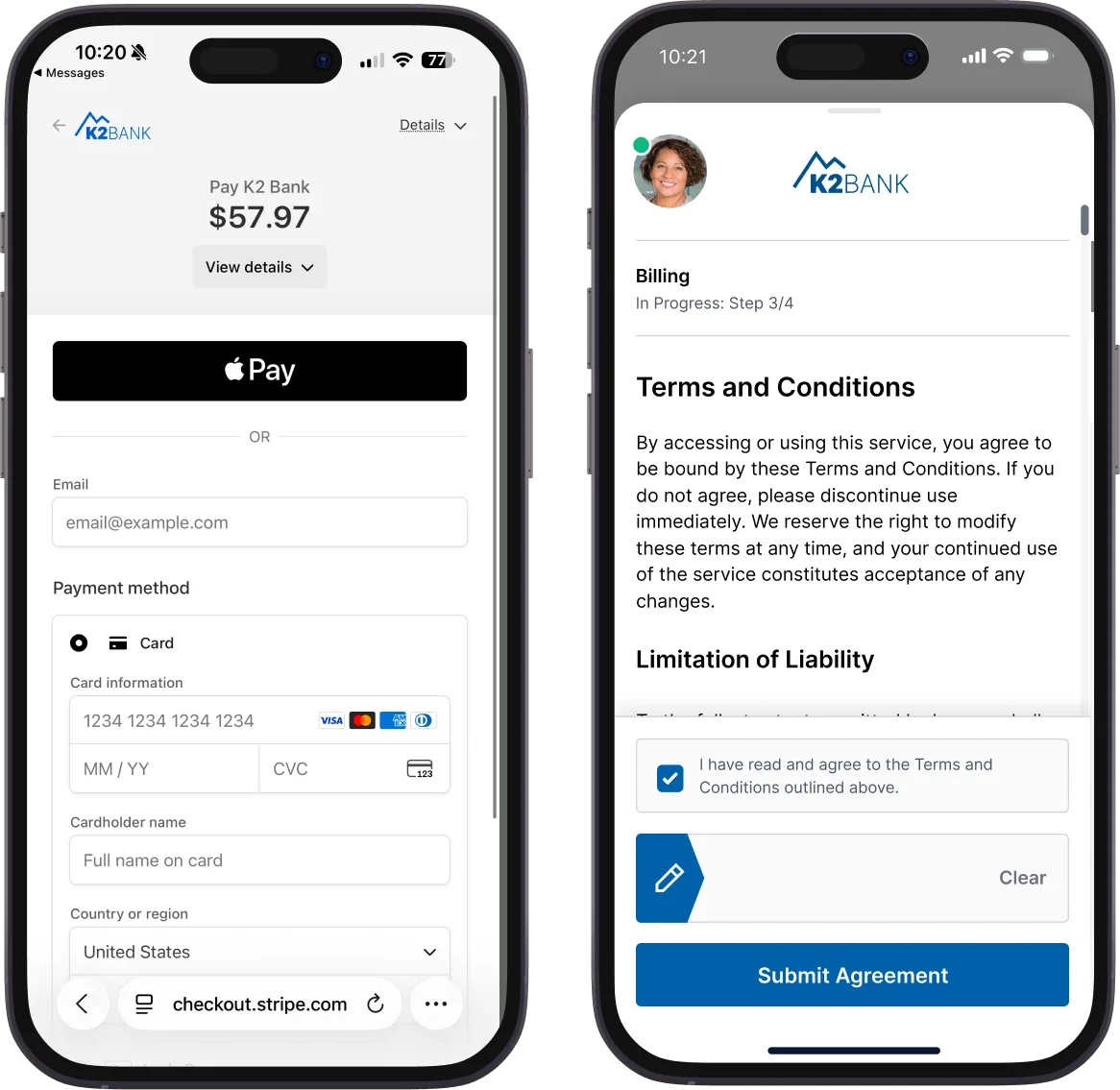
- The customer enters payment details on their smartphone (digital)
- Or completes the step through voice or DTMF
- Ephemerally encrypted card and ACH details bypass your contact center and agent/AI layers and are delivered directly to the payment gateway
- Only results, status, and confirmations return to the workflow
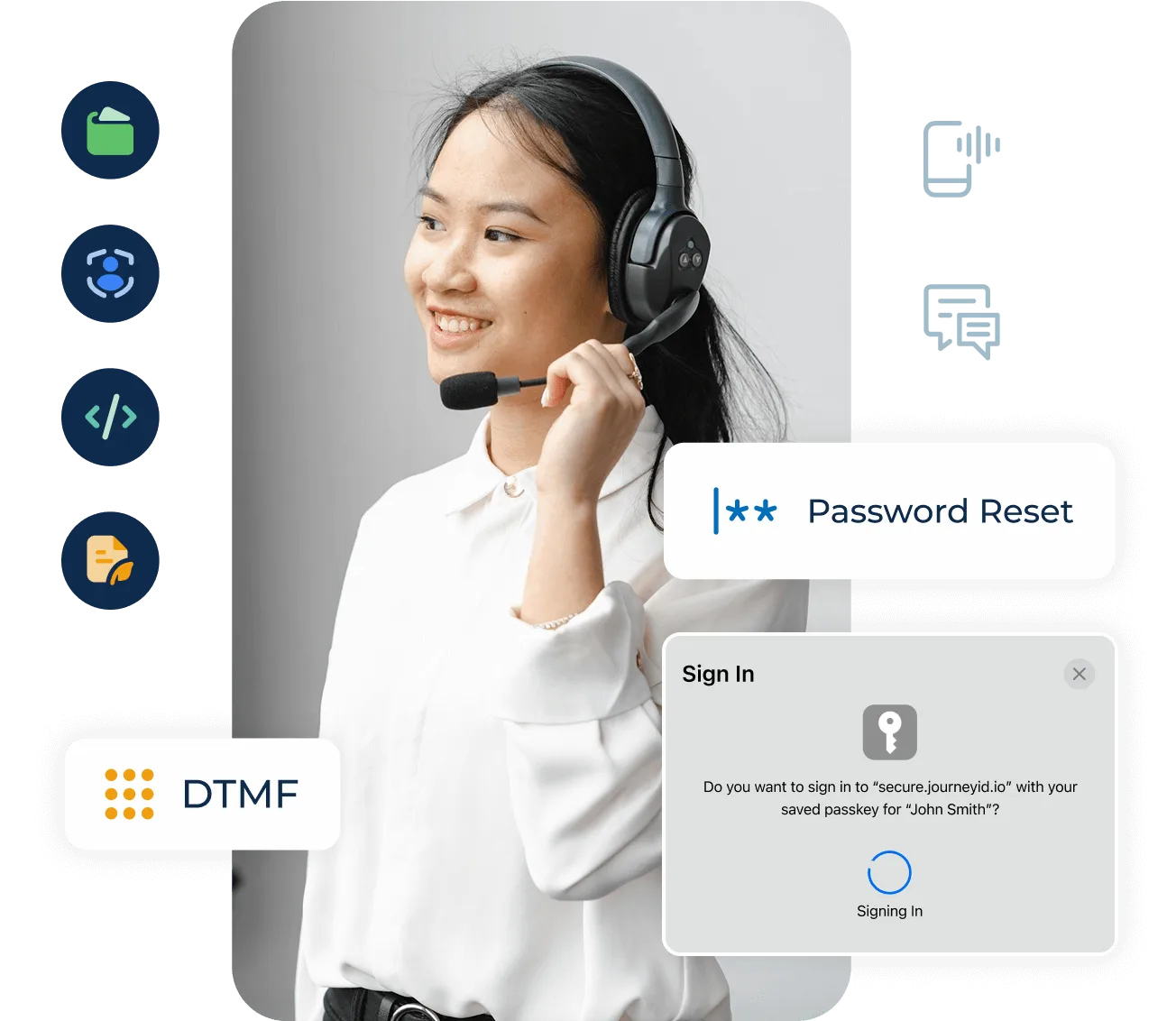
Digital, voice, and DTMF—one consistent architecture.

Reduce PCI cost by reducing exposure—and simplifying operations.
Common cost centers Journey helps reduce or eliminate:
- Call-path appliance procurement, upgrades, and operational burden
- Complex telephony/call routing strategies to manage PCI scope
- Agent pool specialization and “secure desk” requirements
- Transfers to payment IVRs (and the rework when they fail)
- Audit scope expansion caused by sensitive data entering recordings, logs, transcripts, and desktop tools
- AI enablement delays caused by payments and authentication being “out of bounds”
Faster payments. Less friction. Better completion.
When payments move from verbal Q&A to a guided, smartphone-first step, organizations typically see:
- Dramatic reductions in payment-related handle time
- Higher completion rates (fewer abandonment moments)
- Less escalation and fewer repeat calls
- Significant AHT reduction (often 50–75%+ depending on workflow)
- Very high digital adoption in production deployments
- Large scale across thousands of agents and high transaction volume

Payments are where agentic AI stalls. Journey unlocks them.
AI is great at conversation. Transactional containment requires:
- A secure way to collect regulated data
- Deterministic tools the AI can invoke
- Verified results returned to the AI—without sensitive payloads entering the model context
Journey is purpose-built for this:
Legacy SBC-based solutions do not work well for autonomous AI workflows and do not fully de-scope LLMs from raw card data; Journey does.

Don’t manage PCI risk with policy and cleanup. Remove the exposure.
Many organizations try to “control” exposure through training, policies, and redaction. Journey reduces exposure at the architecture level by keeping sensitive payment data out of the interaction layer in the first place.
That’s what makes it scalable—for humans, for WFH teams, and for agentic AI.
Get Started
Want to de-scope PCI and reduce payment call time?
We’ll demo a real payment workflow in your environment (agent-assisted, IVR/IVA, chat, or agentic AI) and show exactly what agents and AI see: progress, status, and results—without exposure to card or ACH details.